
SITES OF INTEREST
SITES OF INTEREST
Monuments, museums, archaeological areas, nature reserves of Syracuse and its province
- Siracusa
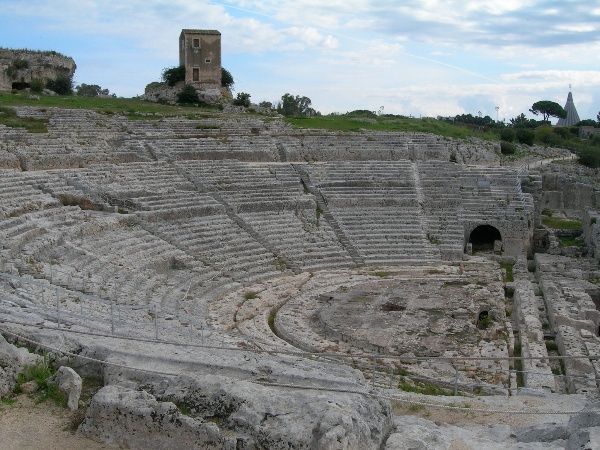
Neapolis Park
via Luigi Bernabò Brea
This large archaeological area was part of the newest district of the ancient city. While exploring it you can admire some of the most famous public monuments of Antiquity like the Greek Theatre, the Altar of Hieron II, the Roman Amphitheatre and learn about other treasures that it encloses like the Nymphaeum and the way of Tombs, the area of the Sanctuary of Apollo Temenites, the ancient stone quarries (latomie), a vast necropolis ( where the so called " Archimedes tomb" is) and the Norman church of St. Nicolò.
- Siracusa
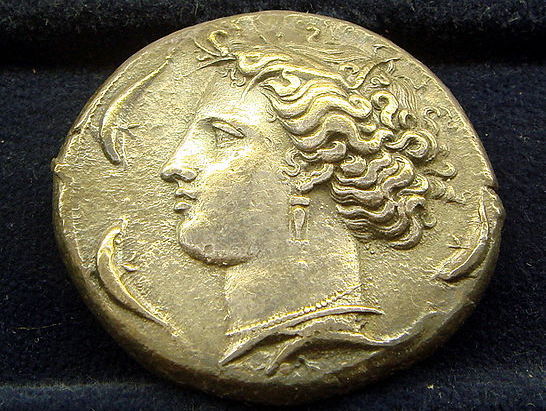
Paolo Orsi Regional Archaeological Museum
viale Teocrito, 66
Opened in 1988, it is named after the internationally renowned archaeologist Paolo Orsi, who was the museum's director for over 30 years. It houses collections of artifacts illustrating prehistory and history of almost all archaeological sites located in eastern and central Sicily, up to the Classical period. The section dedicated to the city of Syracuse (sector B) then showcases artifacts dating from prehistory to the Christian-Byzantine age. Since 2010, the museum has housed the prestigious Numismatic Collection coming from the former museum building located in Piazza Duomo. Absolute must-sees are the Statue of Venus Landolina and the Sarcophagus of Adelphia.
- Siracusa
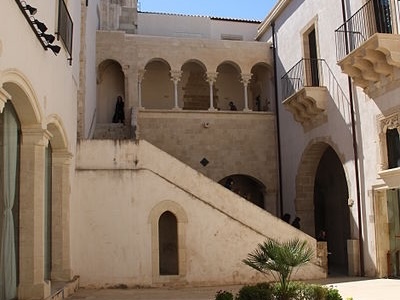
Palazzo Bellomo Regional Gallery
via Capodieci, 14-16
Housed in a very well preserved prestigious 12th-century building featuring the fine architectural criteria of the age of Federick II this regional museum houses a collection of 1,300 works , some of them made of marble or lime stone as well as paintings, decorative arts, dating from the 5th to the 19th century. Not to be missed: "The Annunciation" by Antonello da Messina.
- Siracusa
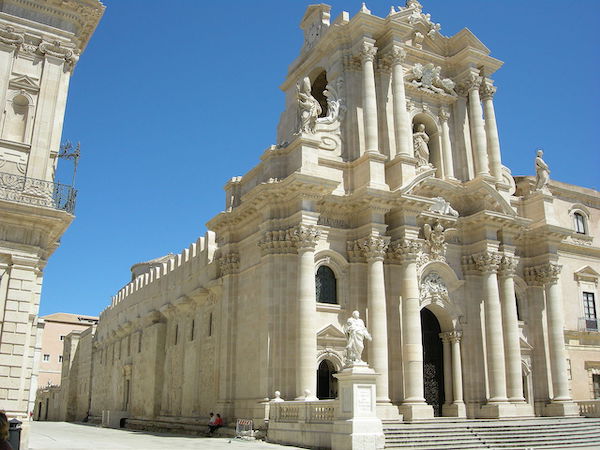
Cathedral and Temple of Athena
piazza Duomo, 3
The Cathedral of Syracuse dedicated to the Nativity of the Virgin Mary stands at the highest point of the island of Ortigia. It incorporates the ancient city's main Doric temple, the temple of Athena (Minerva) , later converted into a church during the Byzantine age. The front façade is in Baroque style, while the interior is a blend of structural parts belonging to the ancient Greek temple and parts added during the medieval and Baroque ages.
- Siracusa
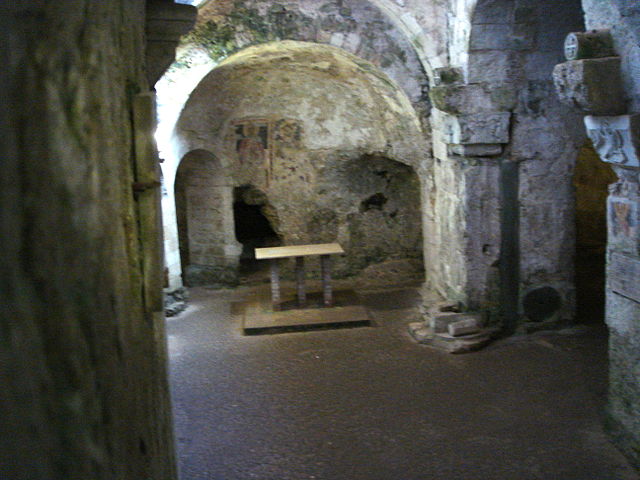
Catacombs of Saint John and Crypt of Saint Marcian
piazzale San Marciano, 3
According to tradition, the Catacombs are famous for having hosted the Apostle Paul while delivering sermons to convert the earliest Christians in the West in the adjacent crypt of St. Marcian. According to the legend, St. Peter sent San Marziano or Marciano (St.Marcian) from Antioch to Syracuse in 39 A.D. in order to spread the Gospel in the city. The Catacombs were built between 315 and 360 A.D.
- Siracusa
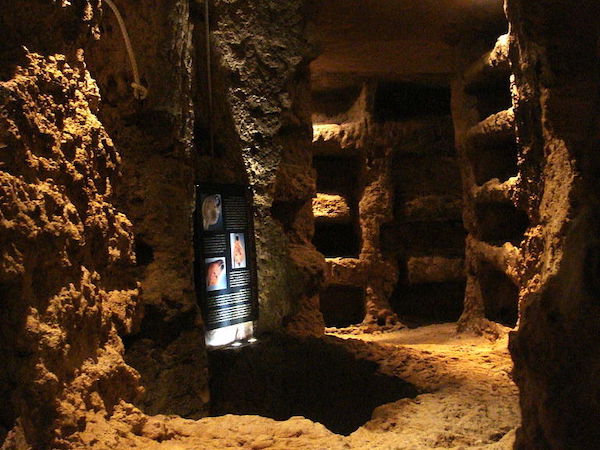
Catacombs of Saint Lucy
piazza Santa Lucia
They date back to 220-230 A.D. and also include an ancient oratory with Byzantine frescoes. They are only partially open to the public on special occasions.
- Siracusa
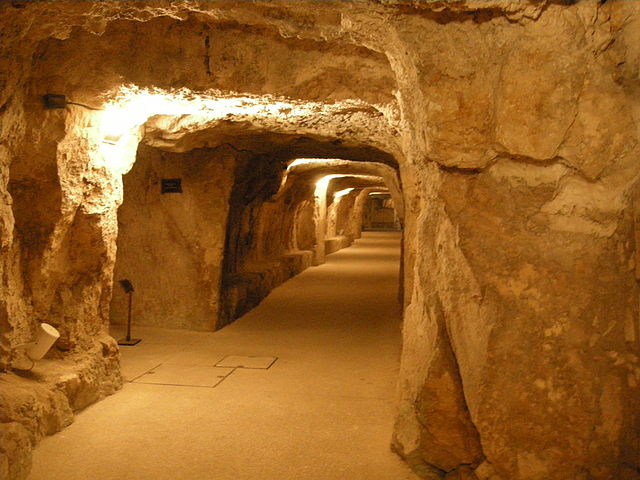
Piazza Duomo Hypogeum
piazza Duomo, 14
An underground path connects Piazza del Duomo to the Marina: a main tunnel branches off into smaller galleries, one of them leads to the great cistern of the Archbishop's mansion. Along the route, you can see remains of other wells or ancient cisterns, which were intercepted and destroyed during the excavation of the tunnels. The entire underground area was used as a bomb shelter during World War II. One room housed the statue of Saint Lucy (Santa Lucia).
- Siracusa
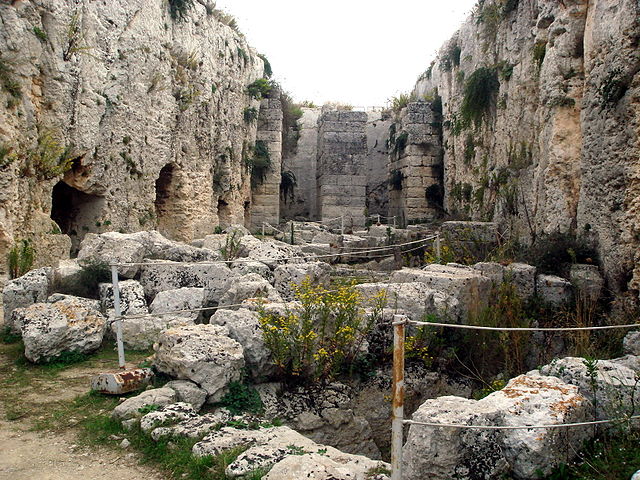
Eurialus Castle
piazza Eurialo, 1
The Euryalus Castle is the most important military building in the defensive system of the city of Syracuse, commissioned by the tyrant Dionysius I to protect the city from the Carthaginians. It stands on the highest point of the hill of the Epipoli district, about 7 km from Syracuse. The impressive fortress was built between 402 and 397 BC. Open only on certain days.
- Siracusa
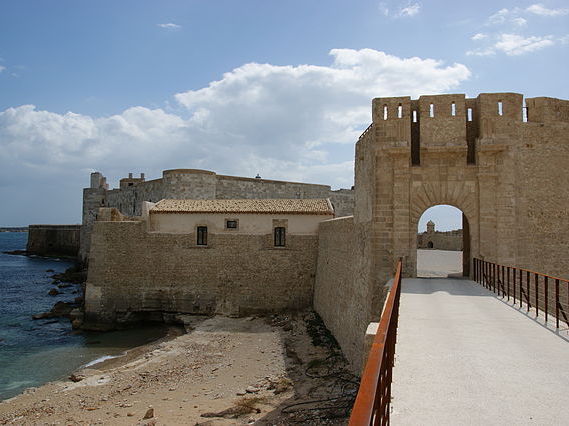
Maniace Castle
piazza Federico di Svevia
Built by the will of Frederick II, between 1232 and 1240, it has a square plan, enclosed by a massive perimeter wall with four cylindrical towers at the corners. The name refers to the Byzantine general George Maniakes, who reconquered the city from the Arabs in 1038. The interior appeared as a single hall marked by 16 free-standing columns that supported 25 bays covered by ribbed cross vaults. Of these, only ten survive.
- Siracusa
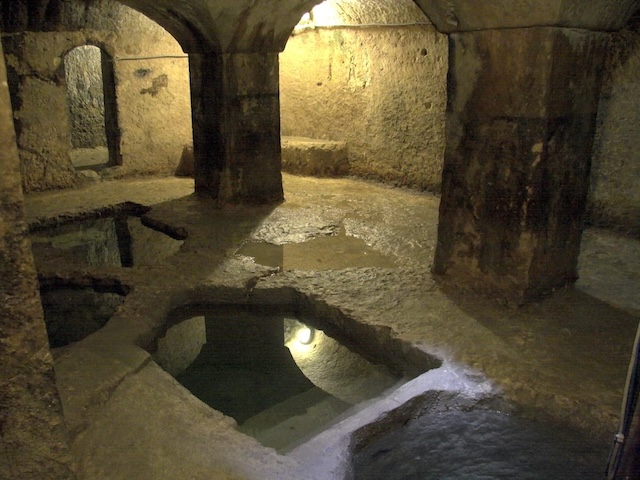
Miqwè (Jewish Bath)
via Alagona, 52
Ancient Jewish ritual bath, located in Ortigia. You descend by means of steps carved into the rock, reaching a depth of 10 meters to access the water table that feeds the baths. On the floor, three ritual pools arranged in a cloverleaf pattern, each 140 cm deep, are filled with water that flows in and out through the cracks in the rock.
- Siracusa
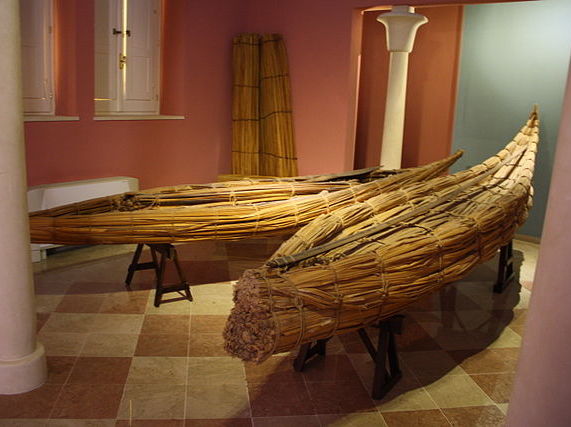
Papyrus Museum
via Nizza, 14
Created and managed by the International Papyrus Institute, founded by Corrado Basile and Anna Di Natale in 1987. It is dedicated to the study, conservation and promotion of the heritage of papyrus culture.
- Siracusa
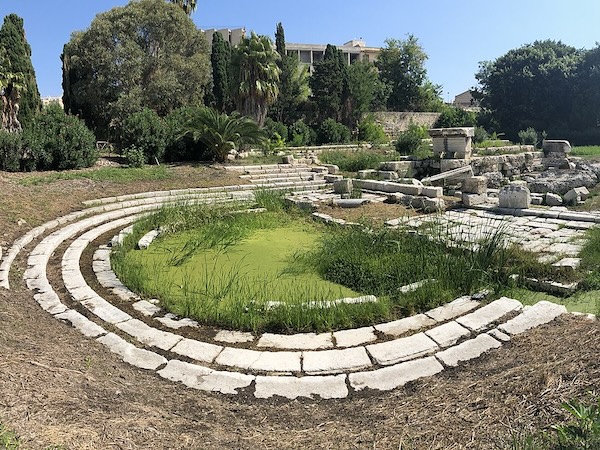
Roman Gymnasium
via Elorina
This monumental complex in Syracuse, probably dating from the second half of the 1st century AD, and mistakenly identified as a gymnasium, includes a theater, a quadriportico ( four-sided portico) and a temple.
- Siracusa
Ionic Temple
piazza Minerva
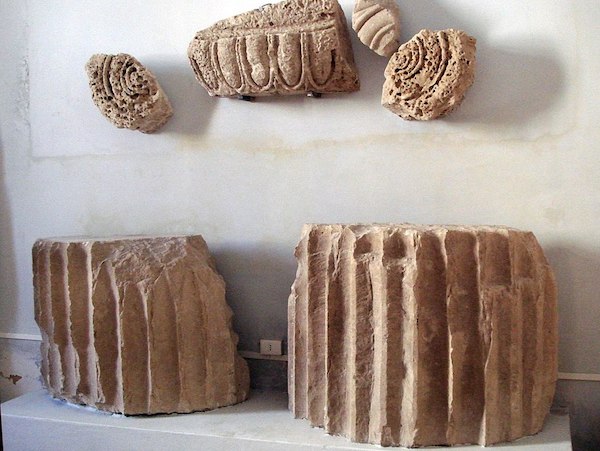
"The Artemision, also known as the Temple of Artemis or the Ionic Temple, is located at the highest point of the island of Ortigia. Flanked by the Cathedral, the former temple of Athena, it is one of the rare examples of this order preserved in the West and dates back to the second half of the sixth century. The few surviving remains are in the basement of the Palazzo del Senato ( The Senate house) : it was never completed.
- Augusta
Antiquarium and archaelogical area of Megara Hyblaea
contrada Megara Giannalena
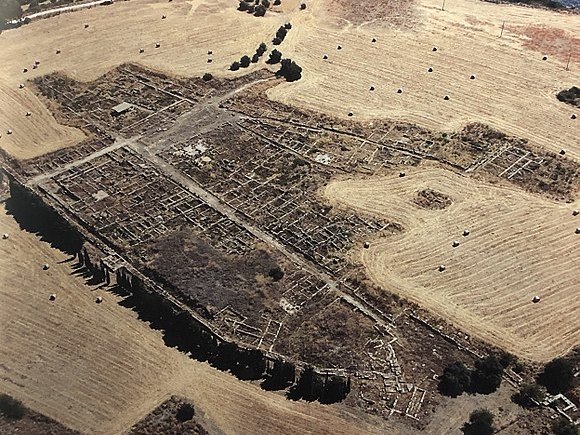
The Greek colony of Megara Hyblaea, founded by Megarians in 728 BC, was razed to the ground twice: in 483 BC by Gelon, tyrant of Gela, and in 213 BC by the Romans. The necropolis is located outside the walls, abutting the oldest fortifications. The excavations give us the opportunity to trace the various phases of the city's life where Hellenistic buildings were later built over archaic remains.
- Lentini
Archaelogical Regional Museum
via del museo, 1 Lentini
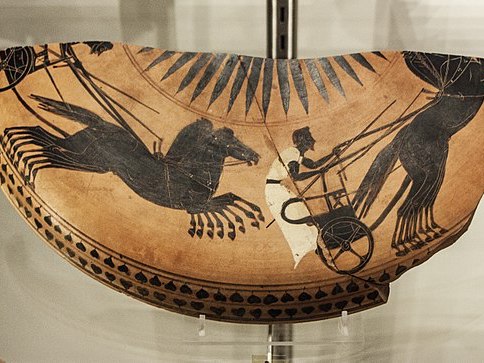
"The museum illustrates the history of Leontinoi and its territory from prehistoric times to the medieval age through the exhibition of artifacts from the ancient city and the main archaeological sites of the area.
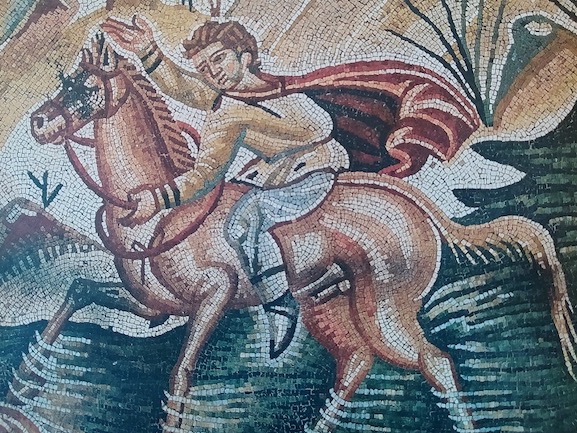
Photo by Giuseppe Celani / CC BY-SA
- Noto
Archaelogical area and Roman Villa del Tellaro
contrada Caddeddi
"In 1971, as a result of clandestine excavations, a villa from the late imperial Roman period was found on the right bank of the Tellaro river, hence the name of the villa. Three rooms preserve the mosaic floors: the easternmost one presents the scene of the ransom of Hector's body; the second shows four festoons that depart from as many craters; the third is decorated with hunting scenes. The front porch has a mosaic floor with elegant garlands of bay leaves.
- Palazzolo Acreide
Archaelogical area of Akrai
colle dell'Acremonte
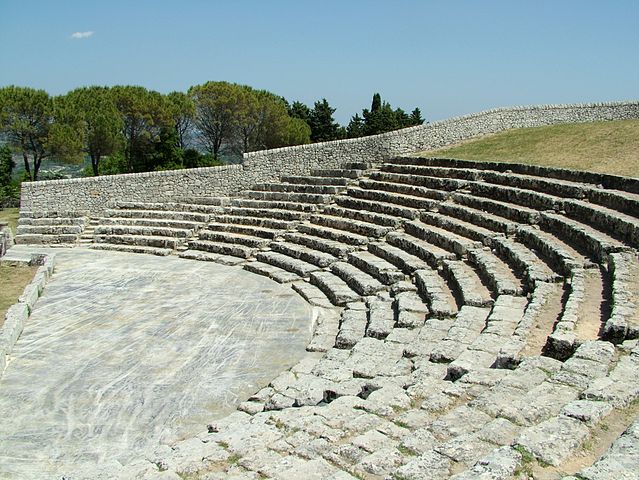
"The city of Akrai was the oldest of the Syracuse subcolonies. The most recent research within the ancient city site has highlighted a main road (plateia), oriented East-West, which served as the most important thoroughfare. This road ran parallel to the stage of the theater, which dates to the Hieronian age (3rd century BC), as the nearby bouleuterion (council chamber) does. On the hill overlooking the theater to the south stands an Archaic temple (second half of the 6th century BC), which is located at the highest point of the city and is identified as the Temple of Aphrodite. To the east of the theater are the stone quarries (latomie) of Intagliata and Intagliatella, which were repurposed during the Christian and Byzantine eras as burial grounds and dwellings.
- Palazzolo Acreide
The Antonino Uccello Regional House-Museum
via Machiavelli, 19
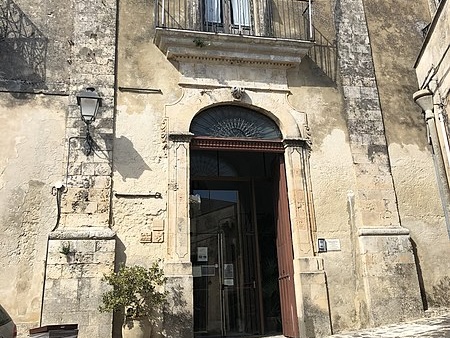
The museum is located in a wing of Palazzo Ferla, a building constructed on pre-existing structures after the earthquake of 1693. Here, Uccello recreated the rooms of a traditional Iblean farmhouse. On the ground floor are the rooms of the massaro, the landowner's trustee. He was responsible for managing the land and animals, storing the harvest and dealing with tenants. On the first floor are the landowner's rooms, currently used as offices and storage rooms.
Cavagrande del Cassibile Nature Reserve
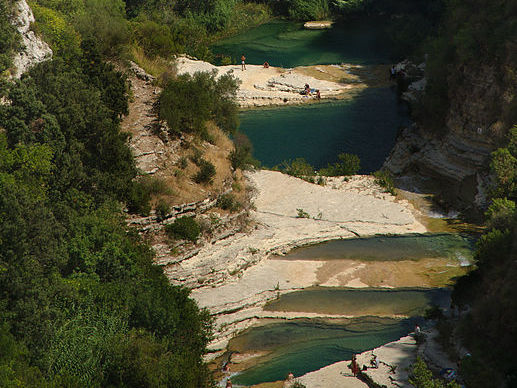
Established in 1990 and managed by the Azienda Foreste Demaniali della Regione Siciliana (the State Forestry Department of the Region of Sicily). The reserve is defined by the course of the Cassibile River—the ancient Greek Kakyparis—which gives its name to the site and shaped it over millennia. The river has carved out deep gorges and canyons reaching various depths, peaking at 507 meters in the Belvedere area of Avola Antica.
Ciane River and Syracuse Salt Pans
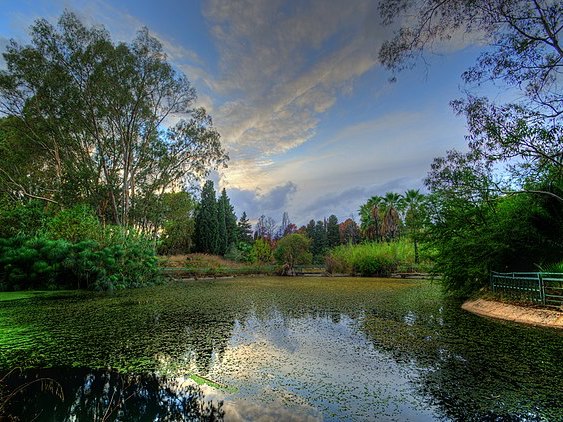
"Established in 1984, it is dedicated to protecting the papyrus along the Ciane River and preserving the environment of the ancient salt pans.
Pantalica, Anapo Valley and Cavagrande Creek
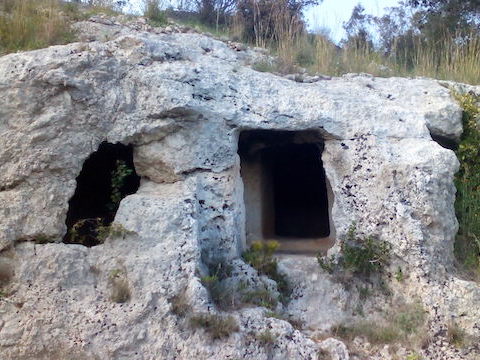
Established in 1997 and managed by the Regional Department of State Forests. It is home to the largest European necropolis with about 5,000 prehistoric tombs carved into the rock overlooking the canyon. The valley floor is crossed by the Anapo River, which originates on Mount Lauro in the Iblei Mountains and flows into the port of Syracuse. There are also two karst caves within the reserve, the Bat Cave and the Trovato Cave. Near Ferla is the Giarranauti forest.
Vendicari Wildlife Oasis Nature Reserve
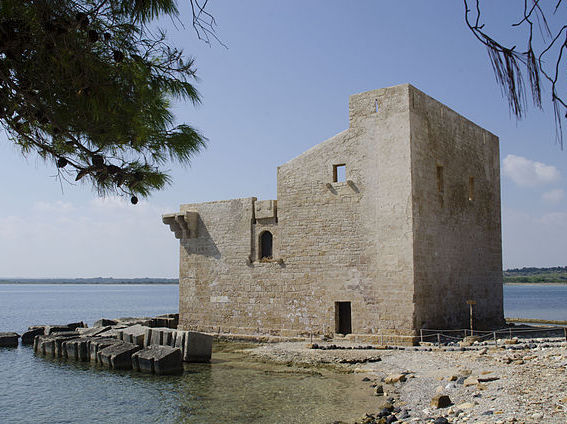
Numerous marshes serve as resting places for migrating birds. The reserve was officially established in 1984 and is managed by the Regional Department of State Forests (Azienda Regionale Foreste Demaniali) . Several archaeological and architectural remains testify to human presence in these places since Greek era. During the Byzantine age, the southern part of the area was inhabited. The Swabian tower demonstrates the strategic importance of the area for coastal defense. Not far away is the 18th-century Vendicari tuna fishery, which still has its chimney in good condition, as well as various buildings and fishermen's houses. It ceased operations in 1943.
Plemmirio marine protected area
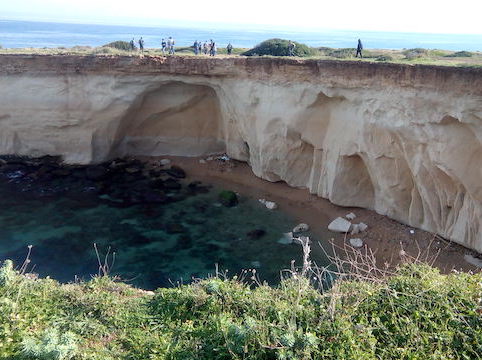
It covers the eastern coastline of the Maddalena Peninsula. It is of great importance in terms of flora and marine life, but also from a historical point of view. A crossroads for the transit of Carthaginian, Roman, and Greek ships and vessels, the Plemmirio area is home to several amphorae and artifacts from various eras, including those from the Second World War.
© Copyright 2026 - Mauro Celani